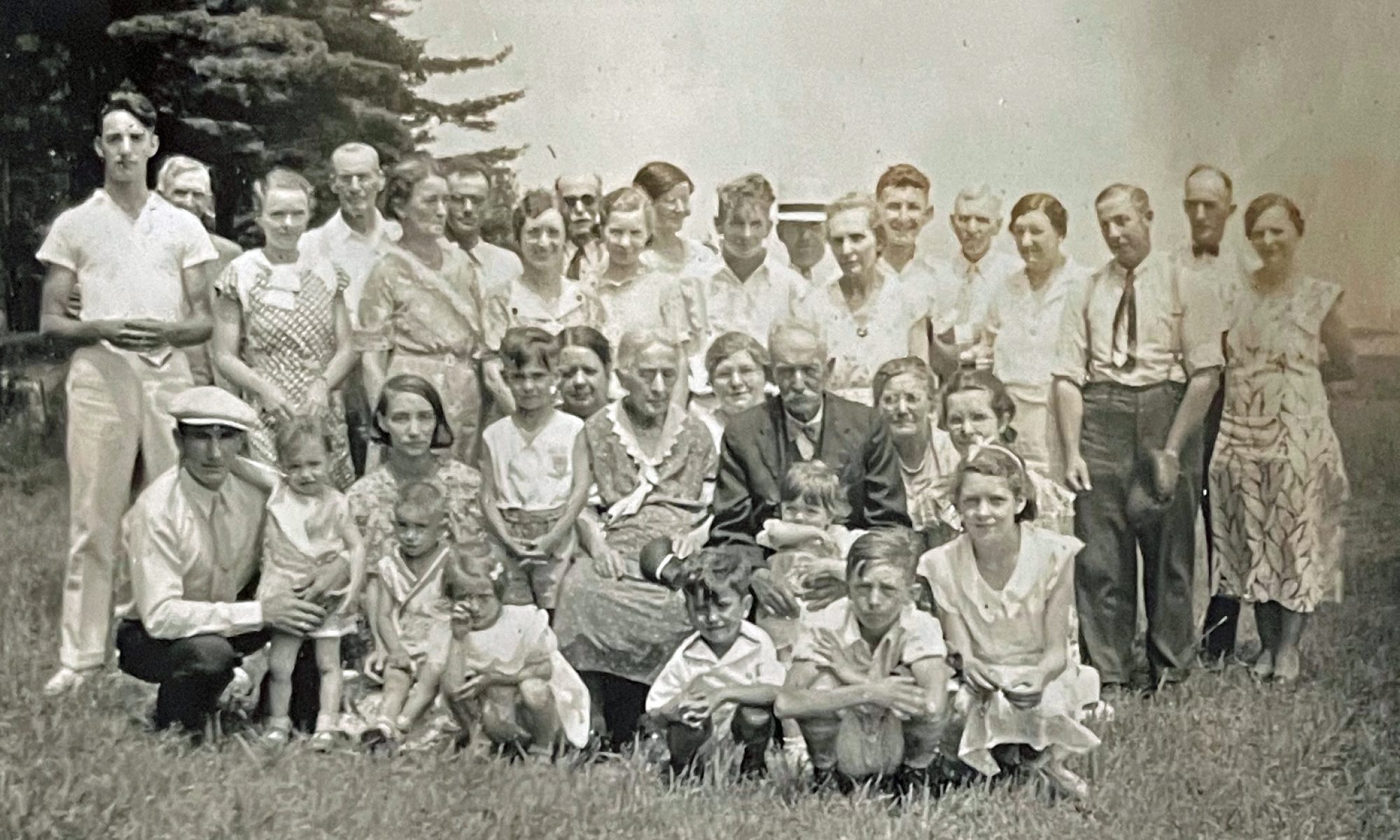


Patrilineal and patrilocal (virolocal) social structures leave distinct, observable signatures on human Y-chromosome diversity. Patrilineal and patrilocal/virolocal systems lead to reduced Y-chromosome diversity within groups and lineages, with distinct genetic clustering matching societal divisions. These signatures arise because men (and thus Y chromosomes) stay put, while women (carrying mtDNA) move between groups, resulting in localized Y lineages and greater mtDNA diversity at the local level. This social structure underlies the observed bottleneck in global Y-chromosome diversity during key periods of human prehistory.
Patrilineal Descent: Reduced Y-Chromosome Diversity Within Lineages
In patrilineal societies, individuals affiliate with their father’s lineage. Because social affiliation and inheritance track the male line, men within the same descent group or clan are closely related through paternal ancestry and thus share highly similar Y chromosomes. This lowers Y-chromosome diversity within clans or lineages as compared to non-patrilineal systems.
Over time, the splitting of clans and expansion of certain lineages (due to differential social status or reproductive success) can further reduce overall Y-chromosome diversity, sometimes leading to a “star-like” genealogy [1] , where a few expanded lineages dominate, resulting in a major Y-chromosome bottleneck. [2]
Patrilocal (Virolocal) Residence: Localized Y-Chromosome Signatures
Under patrilocal or virolocal residence (where couples reside with or near the husband’s family), men remain in their birthplace, while women migrate between communities. [3]
This results in:
- Reduced local Y-chromosome diversity: Since most males are born and remain in the same community, their Y chromosomes are similar, and genetic homogeneity increases within groups.
- Higher between-group Y-chromosome differentiation: Limited male migration means that different communities accumulate different Y lineages over time, increasing the genetic distance between groups.
- Greater mitochondrial DNA (mtDNA) diversity locally: As women move between groups, mtDNA (inherited from mothers) is mixed between communities, creating more variation locally than the Y chromosome.
Combined Patrilineal and Patrilocal Impact
When patrilineal descent and patrilocal residence operate together, the effect on Y-chromosome diversity is amplified: [4]
- There is strikingly low Y-chromosome diversity within communities and lineages.
- There tends to be a strong correlation between social descent groups and genetic clusters on the Y chromosome.
- This social structure can produce sharp genetic boundaries corresponding with clan/lineage divisions.
This pattern contrasts sharply with matrilocal societies, where men move and women stay, resulting in more mtDNA homogeneity and greater between-group diversity in Y chromosomes.
Archaeogenetic and Anthropological Evidence
Several studies of ancient and modern populations confirm these patterns: for example, ancient European and Asian settlements practicing patrilocality and patrilineality show high male relatedness (e.g., shared Y-chromosomal haplogroups), and diverse mtDNA lineages among women. [5]
Modeling and simulations show such systems can cause long-lasting Y-chromosome bottlenecks and distinct phylogenetic patterns in genetic data. [6]
Summary Table: Genetic Signatures of Social Systems
Sources
Fearure image is a modified version found in Figure 9: Social Institutions as a Model in Karl-Goran SjogrenI, Iñigo OlaldeI, Sophie Carver, Morten E. Allentoft, Tim Knowles, Guus Kroonen, Alistair W. G. Pike, Peter Schroter, Keri A. Brown, Kate Robson Brown, Richard J. Harrison, Francois Bertemes, David Reich, Kristian Kristiansen, Volker Heyd, Kinship and social organization in Copper Age Europe. A cross-disciplinary analysis of archaeology, DNA, isotopes, and anthropology from two Bell Beaker cemeteries, 16 Nov 2020, PLOS ONE, https://doi.org/10.1371/journal.pone.0241278 , https://journals.plos.org/plosone/article/file?id=10.1371/journal.pone.0241278&type=printable
[1] “Star-like” genealogy refers to a pattern in a genealogical or phylogenetic tree where recent lineages branch out like rays from a central, common ancestor, similar to a star’s shape. This structure typically signifies a rapidly growing population or a recent, sudden expansion from a single origin. The central core of the star represents the most recent common ancestor, with branches being relatively short, as there has not been much time for extensive genetic mutations to accumulate in the descendants.
The most common reason for a star-like pattern is a population that has recently expanded exponentially. All or many of the lineages in the sample descend from a single, recent common ancestor, leading to a compact core of related haplotypes. Because the expansion is recent, there is little genetic divergence or mutation among the descendant lineages, resulting in short, shallow branches near the root of the tree.
Noah A. Rosenberg and Aaron E. Hirsh, On the Use of Star-Shaped Genealogies in Inference of Coalescence Times, Genetics 164: 1677–1682 (August 2003), https://web.stanford.edu/group/rosenberglab/papers/starphy.pdf
Opgen-Rhein, R., Fahrmeir, L. & Strimmer, K. Inference of demographic history from genealogical trees using reversible jump Markov chain Monte Carlo. BMC Evol Biol 5, 6 (2005). https://doi.org/10.1186/1471-2148-5-6
[2] A chromosome bottleneck refers to a period in human history, for example in the Neolithic era, when the genetic diversity of the Y-chromosome experienced a significant, global decline, while the diversity of the mitochondrial DNA (mtDNA) did not. This phenomenon, sometimes described as a 1:17 male-to-female reproductive ratio, is thought to be caused by cultural changes, such as the rise of patrilineal clans which led to a reduction in the reproductive success of many males, rather than a large-scale die-off of the male population
See:
Population Bottleneck, Wikipedia, This page was last edited on 25 August 2025, https://en.wikipedia.org/wiki/Population_bottleneck
For research studies that touch on patrilineal impacts on YDNA. see the following:
Patrilineality, Wikipedia, This page was last edited on 12 July 2025, https://en.wikipedia.org/wiki/Patrilineality
Patrilocal Residence, Wikipedia, This page was last edited on 20 January 2024, https://en.wikipedia.org/wiki/Patrilocal_residence
Zeng TC, Aw AJ, Feldman MW. Cultural hitchhiking and competition between patrilineal kin groups explain the post-Neolithic Y-chromosome bottleneck. Nat Commun. 2018 May 25;9(1):2077. doi: 10.1038/s41467-018-04375-6. PMID: 29802241; PMCID: PMC5970157 (PubMed) https://pmc.ncbi.nlm.nih.gov/articles/PMC5970157/
Guyon L, Guez J, Toupance B, Heyer E and Chaix R., Patrilineal segmentary systems provide a peaceful explanation for the post-Neolithic Y-chromosome bottleneck. Nat Commun 15, 3243 (2024). https://doi.org/10.1038/s41467-024-47618-5
Rafaëlle Chaix and Léa Guyon, Social change may explain decline in genetic diversity of the Y chromosome at the end of the Neolithic period, 24 April 2024, CNRS, https://www.cnrs.fr/en/press/social-change-may-explain-decline-genetic-diversity-y-chromosome-end-neolithic-period
[3] Kumar V, Langstieh BT, Madhavi KV, Naidu VM, Singh HP, Biswas S, Thangaraj K, Singh L, Reddy BM. Global patterns in human mitochondrial DNA and Y-chromosome variation caused by spatial instability of the local cultural processes. PLoS Genet. 2006 Apr;2(4):e53. doi: 10.1371/journal.pgen.0020053. Epub 2006 Apr 14. Erratum in: PLoS Genet. 2006 Jun;2(6):e95. PMID: 16617372; PMCID: PMC1435684 (PubMed) https://pmc.ncbi.nlm.nih.gov/articles/PMC1435684/
G. Hamilton, M. Stoneking, & L. Excoffier, Molecular analysis reveals tighter social regulation of immigration in patrilocal populations than in matrilocal populations, Proc. Natl. Acad. Sci. U.S.A. 102 (21) 7476-7480, https://doi.org/10.1073/pnas.0409253102 (2005)
Gunnarsdóttir, E., Nandineni, M., Li, M. et al. Larger mitochondrial DNA than Y-chromosome differences between matrilocal and patrilocal groups from Sumatra. Nat Commun 2, 228 (2011). https://doi.org/10.1038/ncomms1235
Guyon, L., Guez, J., Toupance, B. et al. Patrilineal segmentary systems provide a peaceful explanation for the post-Neolithic Y-chromosome bottleneck. Nat Commun 15, 3243 (2024). https://doi.org/10.1038/s41467-024-47618-5
[4] Zeng TC, Aw AJ, Feldman MW. Cultural hitchhiking and competition between patrilineal kin groups explain the post-Neolithic Y-chromosome bottleneck. Nat Commun. 2018 May 25;9(1):2077. doi: 10.1038/s41467-018-04375-6. PMID: 29802241; PMCID: PMC5970157 (PubMed) https://pmc.ncbi.nlm.nih.gov/articles/PMC5970157/
Raphaëlle Chaix, Frédéric Austerlitz, Tatyana Khegay, Svetlana Jacquesson, Michael F. Hammer, Evelyne Heyer, Lluís Quintana-Murci, The Genetic or Mythical Ancestry of Descent Groups: Lessons from the Y Chromosome, The American Journal of Human Genetics, Volume 75, Issue 6, 2004, Pages 1113-1116, ISSN 0002-9297, https://doi.org/10.1086/425938 .
(https://www.sciencedirect.com/science/article/pii/S0002929707600780 )
Guyon, L., Guez, J., Toupance, B. et al. Patrilineal segmentary systems provide a peaceful explanation for the post-Neolithic Y-chromosome bottleneck. Nat Commun 15, 3243 (2024). https://doi.org/10.1038/s41467-024-47618-5
[5] See for example:
Karl-Goran SjogrenI, Iñigo OlaldeI, Sophie Carver, Morten E. Allentoft, Tim Knowles, Guus Kroonen, Alistair W. G. Pike, Peter Schroter, Keri A. Brown, Kate Robson Brown, Richard J. Harrison, Francois Bertemes, David Reich, Kristian Kristiansen, Volker Heyd, Kinship and social organization in Copper Age Europe. A cross-disciplinary analysis of archaeology, DNA, isotopes, and anthropology from two Bell Beaker cemeteries, 16 Nov 2020, PLOS ONE, https://doi.org/10.1371/journal.pone.0241278 , https://journals.plos.org/plosone/article/file?id=10.1371/journal.pone.0241278&type=printable
Raphaëlle Chaix, Frédéric Austerlitz, Tatyana Khegay, Svetlana Jacquesson, Michael F. Hammer, Evelyne Heyer, Lluís Quintana-Murci, The Genetic or Mythical Ancestry of Descent Groups: Lessons from the Y Chromosome, The American Journal of Human Genetics, Volume 75, Issue 6, 2004, Pages 1113-1116, ISSN 0002-9297, https://doi.org/10.1086/425938 .
(https://www.sciencedirect.com/science/article/pii/S0002929707600780 )
Guyon, L., Guez, J., Toupance, B. et al. Patrilineal segmentary systems provide a peaceful explanation for the post-Neolithic Y-chromosome bottleneck. Nat Commun 15, 3243 (2024). https://doi.org/10.1038/s41467-024-47618-5
Raphaëlle Chaix, Frédéric Austerlitz, Tatyana Khegay, Svetlana Jacquesson, Michael F. Hammer, Evelyne Heyer, Lluís Quintana-Murci, The Genetic or Mythical Ancestry of Descent Groups: Lessons from the Y Chromosome, The American Journal of Human Genetics, Volume 75, Issue 6, 2004, Pages 1113-1116, ISSN 0002-9297, https://doi.org/10.1086/425938 .
(https://www.sciencedirect.com/science/article/pii/S0002929707600780 )
Zeng TC, Aw AJ, Feldman MW. Cultural hitchhiking and competition between patrilineal kin groups explain the post-Neolithic Y-chromosome bottleneck. Nat Commun. 2018 May 25;9(1):2077. doi: 10.1038/s41467-018-04375-6. PMID: 29802241; PMCID: PMC5970157 (PubMed) https://pmc.ncbi.nlm.nih.gov/articles/PMC5970157/
Sjögren, Karl-Goran, et al, Kinship and social organization in Copper Age Europe. A cross-disciplinary analysis of archaeology, DNA, isotopes, and anthropology from two Bell Beaker cemeteries, PLoS ONE 15(11): e0241278, 2020, doi.org/10.1371/journal.pone.0241278 (pubMed) https://pmc.ncbi.nlm.nih.gov/articles/PMC7668604/
Zedda Nicolettta, Meheux K, Blöcher J, Diekmann Y, Gorelik AV, Kalle M, Klein K, Titze AL, Winkelbach L, Naish E, Brou L, Valotteau F, Le Brun-Ricalens F, Burger J, Brami M. Biological and substitute parents in Beaker period adult-child graves. Sci Rep. 2023 Oct 31;13(1):18765. doi: 10.1038/s41598-023-45612-3. PMID: 37907573; PMCID: PMC10618162. (PubMed) https://pubmed.ncbi.nlm.nih.gov/37907573/
[6] Zeng TC, Aw AJ, Feldman MW. Cultural hitchhiking and competition between patrilineal kin groups explain the post-Neolithic Y-chromosome bottleneck. Nat Commun. 2018 May 25;9(1):2077. doi: 10.1038/s41467-018-04375-6. PMID: 29802241; PMCID: PMC5970157 (PubMed) https://pmc.ncbi.nlm.nih.gov/articles/PMC5970157/
Guyon L, Guez J, Toupance B, Heyer E and Chaix R., Patrilineal segmentary systems provide a peaceful explanation for the post-Neolithic Y-chromosome bottleneck. Nat Commun 15, 3243 (2024). https://doi.org/10.1038/s41467-024-47618-5
[7] Zeng TC, Aw AJ, Feldman MW. Cultural hitchhiking and competition between patrilineal kin groups explain the post-Neolithic Y-chromosome bottleneck. Nat Commun. 2018 May 25;9(1):2077. doi: 10.1038/s41467-018-04375-6. PMID: 29802241; PMCID: PMC5970157 (PubMed) https://pmc.ncbi.nlm.nih.gov/articles/PMC5970157/
Guyon L, Guez J, Toupance B, Heyer E and Chaix R., Patrilineal segmentary systems provide a peaceful explanation for the post-Neolithic Y-chromosome bottleneck. Nat Commun 15, 3243 (2024). https://doi.org/10.1038/s41467-024-47618-5
Rafaëlle Chaix and Léa Guyon, Social change may explain decline in genetic diversity of the Y chromosome at the end of the Neolithic period, 24 April 2024, CNRS, https://www.cnrs.fr/en/press/social-change-may-explain-decline-genetic-diversity-y-chromosome-end-neolithic-period
[8] Kumar V, Langstieh BT, Madhavi KV, Naidu VM, Singh HP, Biswas S, Thangaraj K, Singh L, Reddy BM. Global patterns in human mitochondrial DNA and Y-chromosome variation caused by spatial instability of the local cultural processes. PLoS Genet. 2006 Apr;2(4):e53. doi: 10.1371/journal.pgen.0020053. Epub 2006 Apr 14. Erratum in: PLoS Genet. 2006 Jun;2(6):e95. PMID: 16617372; PMCID: PMC1435684 (PubMed) https://pmc.ncbi.nlm.nih.gov/articles/PMC1435684/
G. Hamilton, M. Stoneking, & L. Excoffier, Molecular analysis reveals tighter social regulation of immigration in patrilocal populations than in matrilocal populations, Proc. Natl. Acad. Sci. U.S.A. 102 (21) 7476-7480, https://doi.org/10.1073/pnas.0409253102 (2005)
Gunnarsdóttir, E., Nandineni, M., Li, M. et al. Larger mitochondrial DNA than Y-chromosome differences between matrilocal and patrilocal groups from Sumatra. Nat Commun 2, 228 (2011). https://doi.org/10.1038/ncomms1235